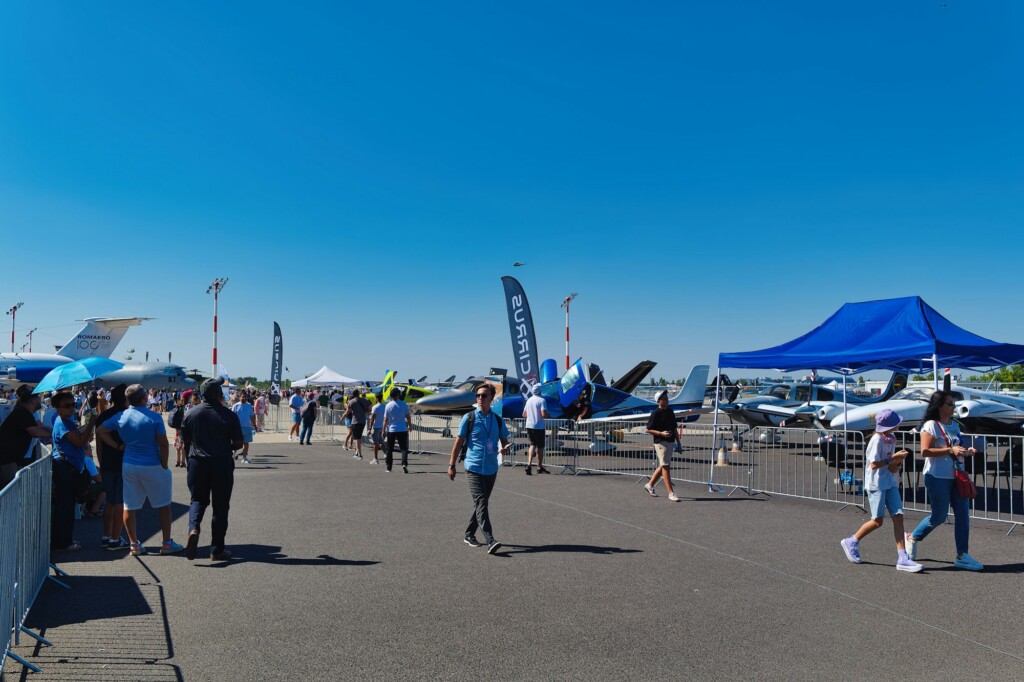
An aerospace trade show and B2B meetings: the context of ADSE 2026
The event ran over two full days, with the exhibit hall and B2B meetings open in parallel, from 9:00 a.m. to 5:00 p.m. on the first day and from 8:30 a.m. to 3:00 p.m. on the second. This shared time window meant that B2B meetings and booth visits could flow into one another without a scheduling conflict for attendees.
The official program brought together high-profile speakers, including a Secretary of State for Defence Procurement for the Government of Canada, a Commander of the Royal Canadian Air Force, and executives from major companies such as Bombardier, Lockheed Martin, Saab and Airbus Helicopters, according to the official event page published by the Aerospace Industries Association of Canada . This mix of profiles, blending government decision-makers and industry leaders, matches exactly the kind of audience that benefits most from structured matchmaking rather than networking left to chance.
A distinct, sponsored B2B component running alongside the trade show
What sets ADSE 2026’s structure apart is that the B2B meetings formed their own time block, clearly identified on the official schedule and sponsored by a vendor separate from the event’s main sponsor. This distinct identity for the B2B component sends a clear signal to attendees: these meetings are not a mere sideshow to the trade show but a core part of the event’s value.
Separating the funding of the B2B component from the rest of the program also makes it possible to demonstrate, with numbers, the distinct business value of this component to future sponsors, rather than diluting it into the event’s overall budget.
Structuring meetings around the program instead of competing with it
A common challenge for trade show organizers is preventing B2B meetings from emptying out the conference room, or the reverse, conferences emptying out planned B2B meetings. At ADSE 2026, this tension was eased by scheduling refreshment breaks directly inside the exhibit hall between conference blocks, which naturally encouraged attendees to move between the two spaces rather than choosing one over the other.
The table below summarizes the typical schedule structure observed on the first day of the event.
Time block
Main activity
Link to B2B meetings
8:00 to 9:00 a.m.
Check-in and registration
Confirming the day’s meetings
9:00 to 10:00 a.m.
Opening remarks
B2B meetings available in parallel
10:00 to 11:00 a.m.
Refreshment break in the trade show
Natural transition toward the booths
11:00 a.m. to 5:00 p.m.
Alternating talks and panels
B2B meetings continuing all day
The role of informal networking after the formal meetings
Beyond the planned B2B meetings, ADSE 2026 also relied on less structured networking activities at the end of the day, including a welcome reception followed by an evening event held directly in an aircraft hangar by one of the event’s sponsors. This kind of activity extends conversations started during formal meetings, in a setting where attendees feel less pressed for time.
The exceptional networking tools built for this kind of context make it possible to document the follow-up intentions expressed during these informal exchanges, so they aren’t lost once the event is over.
What other sector-specific trade shows can take away from this
The structure observed at ADSE 2026 rests on three principles that carry over to other sector-specific trade shows: a distinct time block for B2B meetings, a program that encourages movement between spaces rather than competition between them, and informal networking opportunities that extend formal meetings. Together, these elements turn a traditional exhibit hall into a complete matchmaking platform.
An all-in-one event platform makes it easier to implement this structure, by centralizing registration, matchmaking and meeting follow-up in a single tool rather than several separate systems.
Structuring your next aerospace trade show and B2B meetings
An aerospace trade show and B2B meetings deliver the best results when the B2B component is treated as a full-fledged part of the event, with its own schedule and its own funding, rather than a simple add-on to the exhibit hall. The ADSE 2026 experience shows that a well-thought-out structure benefits participating companies just as much as organizers looking to demonstrate the concrete value of their event.
Organizers who want to structure this kind of B2B component for their next trade show can request a demo of the platform to see how it can be adapted to their event.
Frequently asked questions
What is an aerospace trade show with integrated B2B meetings?
An aerospace trade show with integrated B2B meetings combines a traditional exhibit hall with a distinct time block dedicated to planned business meetings between companies. Unlike a traditional trade show where booth visits remain informal, this format guarantees structured meetings between compatible profiles, often sponsored separately from the rest of the event.
How can B2B meetings be kept from conflicting with the conference program?
Scheduling program breaks directly inside the exhibit hall, rather than in a separate space, naturally encourages attendees to move between the two components of the event. This approach, observed at ADSE 2026, prevents attendees from having to choose between attending conferences and honoring their planned B2B meetings.
Why sponsor the B2B component of an aerospace trade show separately?
Sponsoring the B2B component separately makes it possible to demonstrate, with precise data on the number of meetings held, the distinct business value of this component to future sponsors. This approach also makes it easier to sell targeted sponsorships to companies specifically seeking visibility with decision-makers rather than a general presence at the event.