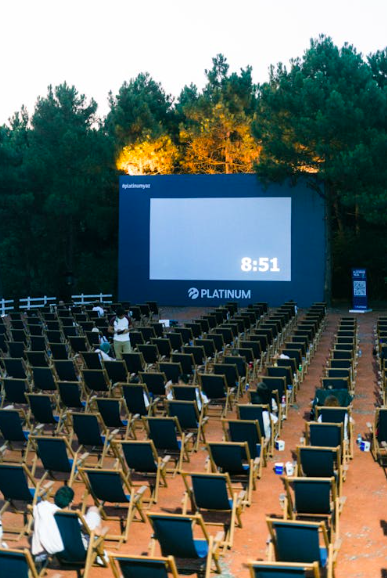
This scenario plays out every summer in dozens of Quebec organizations that underestimated a simple reality: summer is the most challenging season of the year for B2B events. Not impossible — challenging. And the difference between a summer event that performs and one that disappoints comes down to a series of decisions made well before event day.
Here’s how to make the right ones.
Understanding why summer is genuinely different
Before talking solutions, the problem needs to be named precisely. Summer doesn’t kill your events because people are less interested in professional networking. It complicates them because three factors combine simultaneously in a way that doesn’t exist at any other time of year.
Vacation schedules are concentrated and unpredictable. Unlike the December holidays when everyone is absent at the same time, summer vacations spread chaotically across June through August. The participant who confirms their registration in May doesn’t yet know they’ll be at a cottage the week of your event. Their cancellation arrives with 48 hours’ notice — too late to react.
Competition for attention is at its peak. Festivals, outdoor activities, family commitments, terraces — the Quebec professional in summer has more alternatives to their precious Friday afternoon than at any other season. Your business event isn’t only competing with other professional events. It’s competing with life itself.
Decision-maker availability is reduced. The executives and managers who represent your target audience are often in “manage the essentials” mode during summer. Non-urgent decisions wait until September. Mental availability for a business forum or sector conference is objectively lower than in October or March.
None of these realities are reasons to cancel your summer event. They are parameters to integrate into your design.
Dates to absolutely avoid — and ones that work
Quebec’s summer calendar has its own rules, and organizers who ignore them pay for it in attendance rates.
Weeks to avoid: the Saint-Jean-Baptiste week (around June 24) — Quebec in full celebration mode, professional availability essentially zero. The week of July 1st — moving day, Canada Day festivities, nobody’s thinking about business. The first two weeks of August — peak family vacation period, especially for parents of young children coordinating with summer camp schedules. The week before back-to-school — late August, everyone in transition mode.
Windows that work: the second and third weeks of June — before vacations begin, people are still in professional mode and often motivated by the idea of finishing the business year on a strong connection. Mid-July — an often underestimated window where those not on vacation that specific week are particularly available and engaged, precisely because their colleagues are absent. The last week of August — back-to-school approaches, professional energy returns, people are receptive.
The day of the week matters as much as the week itself. Thursday is the best day for summer business events — far enough from the weekend not to encroach on personal plans, close enough to maintain a sense of professional end-of-week. Friday afternoon is risky: weekend departures frequently win out over the desire to network.
A general principle: in summer, earlier in the day consistently outperforms later. A breakfast conference at 7:30 AM or a morning event from 8 AM to noon generates systematically better attendance rates than a late-afternoon event. Participants manage their professional agenda in the morning before summer’s afternoon unpredictability catches up with them.
Short formats that maximize summer attendance
Summer is not the season for full-day B2B events. A participant hesitating between your 8-hour conference and a beach day with their family is doing a calculation you cannot win.
But that same participant hesitating between your 90-minute networking lunch and a normal workday — that calculation, you can win.
The breakfast conference format (7:30 to 9:30 AM) is the undisputed champion of summer engagement. Short, early, dense — it fits into a professional’s schedule without encroaching on their day. A 30-minute presentation on a precise and relevant topic, followed by 45 minutes of structured networking — this is the format that generates the best actual attendance rates in summer.
The half-day thematic format (8 AM to noon, or 1 PM to 5 PM) remains manageable if the content is sufficiently targeted to justify the half-day commitment. The rule: every hour of your program must earn its place. In summer, participants have zero tolerance for filler content. The slightest session that seems superfluous and you lose their attention — or their presence at the next session.
The outdoor event is an underexploited B2B summer option. A professional networking event in a pleasant outdoor setting — a hotel terrace, a university campus green space, a rooftop — transforms the seasonal constraint into an advantage. Instead of asking people to go indoors while the sun is shining, you invite them to network exactly where they’d want to be anyway.
Pre-event engagement: your best insurance against absences
The drop-off rate between registration and actual attendance is always higher in summer than any other season. The best way to reduce it isn’t sending more reminders — it’s building strong enough engagement that your participant genuinely wants to come, not just intends to.
The difference between a participant who “plans to attend” and one who “can’t wait” is built in the weeks before the event, through a communication sequence that progressively raises the perceived value of being there.
At three weeks out: share the confirmed participant list with profiles. In summer, when the opportunity cost of absence is higher, seeing who will be in the room is a powerful attendance argument. “Sophie Martin from [Company X] will be there — she’s exactly the type of person you’ve been looking to connect with” is worth more than any generic reminder.
At one week out: send a personalized preparation guide featuring the two or three connections your matchmaking system has identified as particularly relevant for this specific participant. A person who knows a valuable meeting is waiting for them doesn’t cancel to go to the beach.
At 48 hours: a short, direct message confirming practical logistics and that everything is ready to welcome them. Not a corporate email with a logo — a human communication that makes them feel personally expected.
The B2B/2GO event platform facilitates exactly this personalized communication sequence, connecting matchmaking data to pre-event communications so each participant receives the right reasons to come — theirs specifically, not everyone’s.
Virtual as a safety net, not an alternative
Lightweight hybrid events are a smart response to summer volatility — as long as they’re designed correctly.
The classic mistake: offering a complete virtual option that allows hesitant participants to stay home without missing much. The predictable result: anemic in-person attendance and a virtual experience that doesn’t generate the business connections your participants were hoping for.
The right approach: a limited, strategic virtual component. Broadcast one or two content sessions live for participants who genuinely cannot travel — but reserve structured networking exclusively for the in-person experience. This asymmetry creates a clear incentive to show up for those who want the full value of the event.
Communicate this distinction explicitly in your invitations. “Content will be accessible online — scheduled B2B meetings are exclusively in-person.” This transparency respects your participants and protects the value of your in-person event.
What doesn’t change in summer: the importance of structure
There’s a temptation, facing summer reality, to simplify to the extreme. More casual format, less structure, “we’ll see how it goes.” That’s the opposite mistake from an event that’s too heavy.
In summer, your participants have made an even more conscious trade-off than usual to be there. They said no to something else. That decision deserves to be honored with an event that uses every minute effectively.
Structured networking — professional matchmaking, pre-scheduled individual meetings, thematic roundtables — is even more valuable in summer than during the rest of the year. Because when people make the effort to come, they want to leave with concrete connections. Not with the vague impression of having spent a pleasant morning.
Your successful summer business event isn’t the one that looks least like a professional event. It’s the one that generates the most value in the least time — and gives your participants a reason to put the next edition in their calendar before they even leave the room.