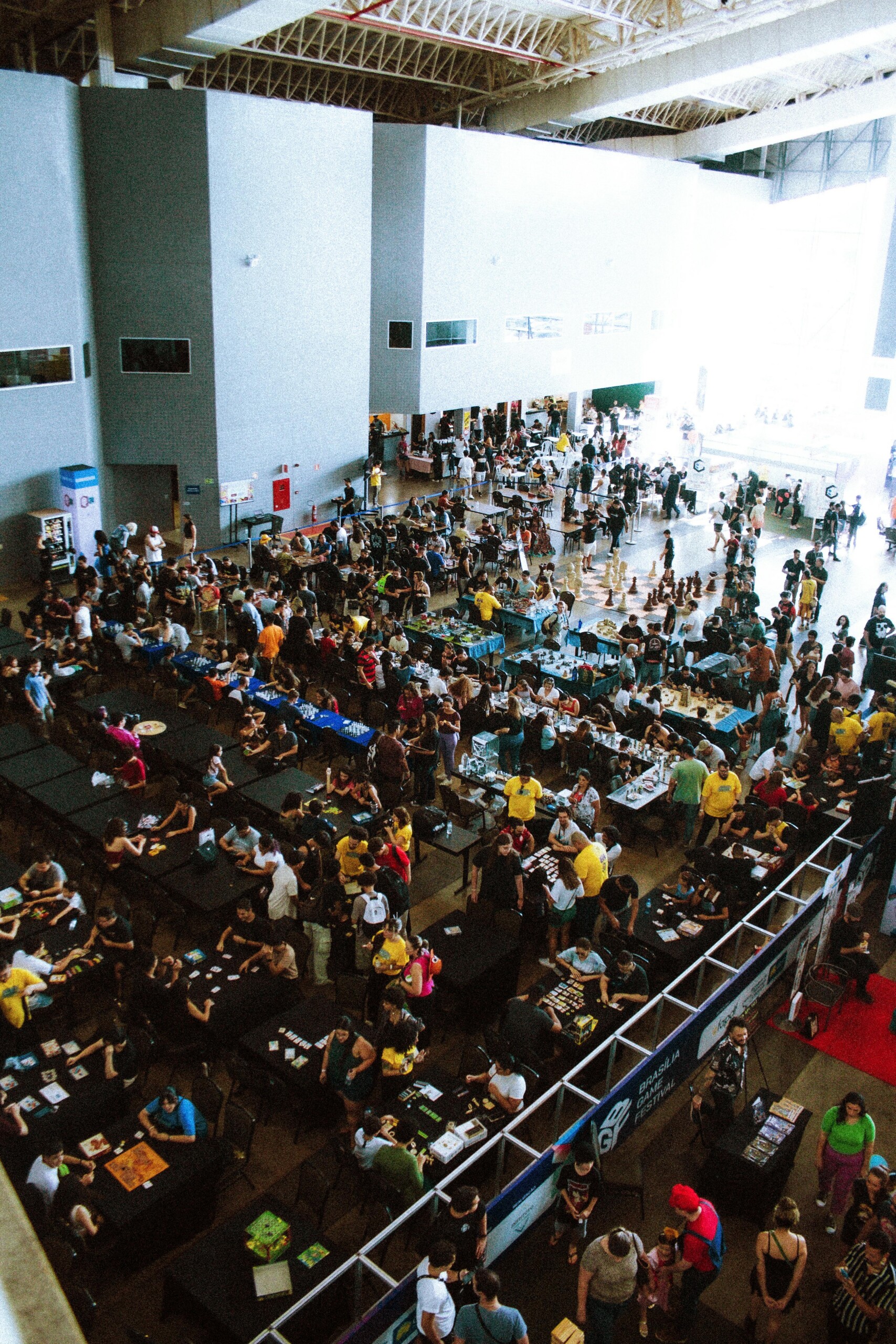
That’s not networking. That’s socializing dressed up as business development.
The kind of networking that generates real commercial opportunities doesn’t happen spontaneously in a crowded room. It’s designed. It’s structured. It’s facilitated. Organizations that have understood this never again leave their participants facing the uncomfortable void of an unorchestrated cocktail hour.
Here are five formats that work — not in theory, but in the reality of B2B events where participants leave with connections that concretely change the trajectory of their business.
Format #1 — Objective-based structured speed networking
Done poorly, speed networking resembles a series of express job interviews where nobody feels comfortable. Done well, it’s one of the most effective formats for generating a high volume of relevant connections in a short amount of time.
The difference comes down to a single element: upfront qualification.
When participants are paired randomly in five-minute rotations, conversations stay superficial. Each person spends half the time explaining what they do and assessing whether the other person is relevant to them. What’s left isn’t enough to go further.
When rotations are built around participants’ profiles, industries, and declared objectives, the dynamic shifts entirely. The two people facing each other already know why they’re talking. The conversation can go straight to the point. Five minutes becomes enough to establish a real connection and agree on a follow-up.
What makes this format effective: the density. In 90 minutes, a participant can have eight to twelve targeted conversations with carefully selected people. No other format produces this ratio of relevant connections per unit of time.
What to absolutely avoid: rotations so short they prevent any substantive conversation, and random matchings that recreate exactly the problem of the unstructured cocktail — just in a more stressful version.
Format #2 — Small-group thematic roundtables
About ten people around a table. A precise topic. A facilitator who asks the right questions and ensures everyone contributes. Forty-five minutes.
This format is consistently underused at B2B events, and that’s a mistake. It combines two elements that other formats struggle to bring together: depth of exchange and the natural creation of bonds between participants.
When ten professionals explore together a problem they all share — how to manage the shift to remote sales, how to retain talent in a competitive market, how to accelerate a complex sales cycle — something happens. Participants stop being strangers and become peers who have shared a common reflection. This transformation creates a relational foundation far more solid than any cocktail conversation.
What makes this format effective: participants remember the people they met in this specific context, associated with a concrete intellectual contribution. “She’s the one who talked about her customer retention strategy” creates a much stronger memory anchor than “he’s the guy I ran into at the cocktail.”
What to absolutely avoid: groups so large they turn the roundtable into a panel, and topics so generic they fail to generate substantive exchange. The theme must be specific enough to create a sense of community among participants.
Format #3 — Matchmaking with pre-scheduled one-on-one meetings
This is the most demanding format to organize and, by far, the one that generates the most measurable commercial value.
The concept is straightforward: before the event, each participant completes a detailed profile including their networking objectives, current needs, and what they can offer. A matchmaking algorithm — or a manual process for smaller events — then generates a personalized agenda of twenty to thirty-minute one-on-one meetings, scheduled in advance and held in dedicated spaces.
No improvisation. No discomfort from cold approaches. Each participant knows exactly who they’re meeting, why that meeting is relevant, and what topic they can prepare in advance.
The results are incomparable to other formats. Conversations are immediately operational. Both parties arrive prepared, with shared context and clear intent. The conversion rate of these meetings into concrete commercial opportunities is consistently higher than any other type of event interaction.
This is precisely what B2B/2GO was designed for: an intelligent matchmaking system that analyzes profiles, objectives, and complementarities to generate personalized meeting agendas. Not optimized randomness. Calculated relevance.
What makes this format effective: the preparation made possible by advance scheduling. A buyer who knows they’re meeting a potential supplier in 48 hours prepares their questions. A salesperson who knows their contact’s profile prepares relevant examples. The quality of the conversation is incomparably higher.
What to absolutely avoid: time slots so short they force conversations to stay superficial, and a registration process so light it produces incomplete profiles — and therefore poorly matched meetings.
Format #4 — Small-group co-development sessions
This format borrows from professional co-development methodology and adapts it for the event context. The result is one of the most powerful networking formats that exists — and one of the least used.
How it works: groups of six to eight people. One participant presents a real, current challenge they’re facing in their organization — not a fictional case, not a theoretical situation, a genuine operational problem. The other group members ask clarifying questions for ten minutes, then share their experiences, approaches, and mistakes on similar situations.
This format creates a level of authenticity and professional vulnerability that other formats simply don’t reach. When someone shares a real challenge in front of you and you contribute to solving it, a trust relationship is established immediately. You’re no longer two strangers exchanging business cards. You’re two professionals who worked together on a real problem.
What makes this format effective: natural reciprocity. Each participant alternates between presenting a challenge and contributing to solving others’ challenges. This dynamic creates implicit mutual obligations that encourage post-event follow-through.
What to absolutely avoid: groups so large they inhibit authentic participation, and facilitators who allow sessions to drift into commercial pitches. The format only works if participants bring genuine operational challenges to the table.
Format #5 — Affinity-based networking with facilitated introductions
This format is built on a simple observation: the most lasting connections are often created between people who share not just an industry, but a similar organizational reality. A 15-person high-growth startup has fundamentally different problems than an established 500-person company, even if they operate in the same sector.
The principle: create networking spaces organized not by industry, but by stage of development, shared challenge, or role profile. All sales directors together. All founders in a growth phase together. All HR leaders managing cultural transformation together.
The differentiating element that takes this format from good to excellent is the facilitated introduction. Rather than placing people in a group and letting them figure it out, a facilitator makes cross-introductions based on specific complementarities identified in advance. “Marie, I wanted to introduce you to Jean. You’re both managing distributed sales teams across multiple markets, and Jean has developed an interesting approach to remote performance management.”
This contextual introduction eliminates the discomfort of the cold approach and immediately gives both people a substantive topic to explore.
What makes this format effective: the immediate relevance of the connection. Participants don’t waste time assessing whether the person in front of them is relevant — that work has already been done.
What to absolutely avoid: affinity groups defined too broadly that recreate the cocktail room problem, and facilitated introductions without specific context that fall flat.
What these five formats have in common
Structure. Not rigidity — structure. The difference between an event where people leave with three business cards they’ll forget in a drawer, and an event where they leave with two or three connections that will concretely change the course of their next few months.
Each of these formats removes something from participants: the discomfort of the cold approach, the uncertainty about whether the person across from them is relevant, the time wasted searching for the right people in a crowd. In exchange, it gives them something infinitely more valuable: the certainty that their time will be well spent.
That’s what a successful event looks like. Not beautiful décor. Not a memorable caterer. Conversations that wouldn’t have happened otherwise — and that actually lead somewhere.