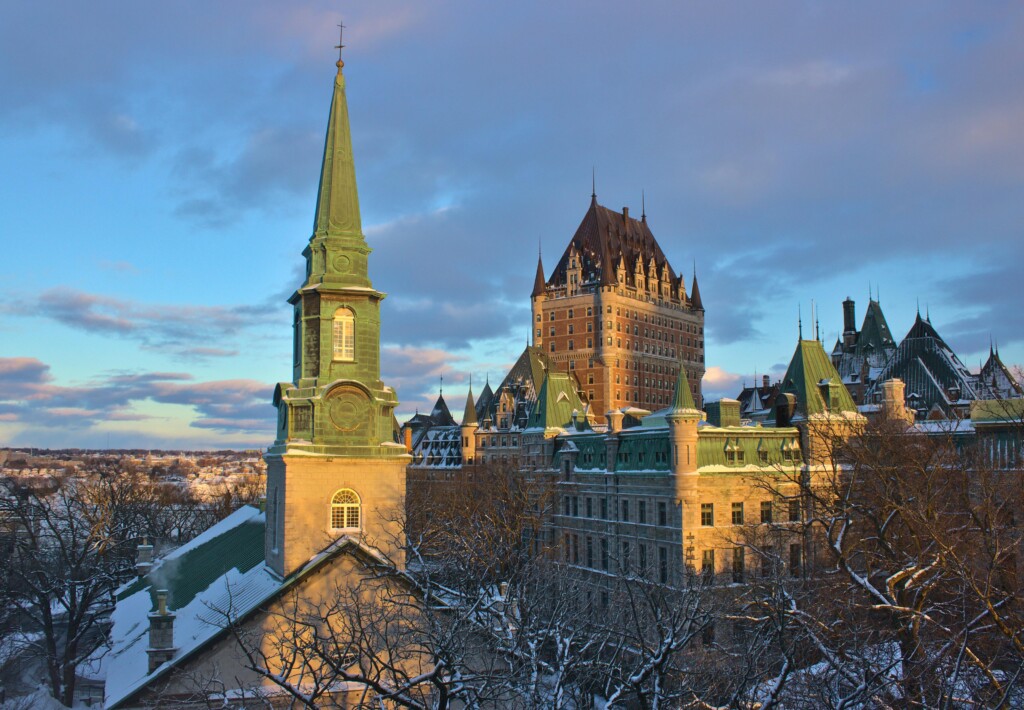
Quebec’s regions are not secondary markets waiting to be fed by Montreal’s overflow. They are autonomous business ecosystems with their own networks, their own B2B networking needs, and a genuine appetite for quality business events held close to home. Ecosystems that, for the most part, are chronically underserved by the current event offering.
That underservice is an opportunity. A significant one, largely ignored, and increasingly accessible thanks to event management platforms that allow organizations to produce professionally quality events without the heavy logistics once associated with that level of production.
Why Quebec’s regions represent fertile ground for B2B events
Dense, underexploited business networks
In a regional city of 80,000 people, entrepreneurs and business leaders often know each other by sight. They frequent the same chambers of commerce, cross paths at the same local events. But this surface-level familiarity often masks a real deficit of qualified connections between the right interlocutors.
The owner of a manufacturing SMB in Mauricie looking for a logistics partner may never have had a structured conversation with the transport company owner operating 15 kilometers away. Not for lack of interest. For lack of context and space for that meeting.
A well-designed B2B networking event creates that space. And in the regions, the novelty of a quality structured event generates a level of enthusiasm and engagement that Montreal organizers — accustomed to a saturated event offering — rarely see anymore.
A durable location competitive advantage
In Montreal, your business event competes for attention against dozens of others happening the same week. The time budgets of Montreal professionals are solicited from every direction.
In Abitibi-Témiscamingue, Gaspésie, Saguenay-Lac-Saint-Jean, or Estrie, your event is often the only one of its kind within a radius that justifies the trip. That relative scarcity is a massive advantage for mobilization: people attend because there aren’t ten equivalent alternatives competing for their day.
The actual attendance rate among registrants — one of the most important but least discussed event KPIs — is consistently higher at well-targeted regional events than at metropolitan ones.
Significantly lower operational costs
The venue, catering, accommodation for traveling participants, production costs — everything is less expensive outside the major centers. A business event that would require $80,000 in Montreal can often be produced for $45,000 in the regions without sacrificing attendee experience quality.
This cost difference has two direct consequences. First, a regional event can reach financial viability with a lower participant count, which reduces organizational risk. Second, a better cost-impact ratio makes it easier to secure local sponsorships — regional companies invest more willingly in events that directly reach their immediate business community.
Regional specificities to integrate into your event design
Adapting format to geographic reality
Regional participants often have different travel constraints than urban center attendees. Some come from rural municipalities an hour’s drive away. Others operate businesses that can’t afford to have a senior leader absent for a full day.
Compact event formats — an intensive half-day rather than a full day — often work better in the regions. A lightweight hybrid event, allowing some participants to join remotely for part of the content, extends accessibility without weighing down logistics. A virtual networking platform integrated into an in-person event keeps remote participants engaged even when they can’t make the full trip.
Anchoring in local economic realities
A business forum on the Côte-Nord that addresses supply chain and natural resource exports speaks directly to participants’ reality. A corporate event in Bas-Saint-Laurent exploring digital transformation for manufacturing companies answers a concrete need of the local ecosystem.
Regional events that perform aren’t diluted copies of Montreal conferences. They’re designed from the ground up around the specific challenges of the B2B companies operating in that precise ecosystem. This local relevance is their primary competitive advantage.
Mobilizing local ambassadors
In the regions, the credibility of a business event is largely built through association. Who’s behind the event? Which respected local leaders are involved as speakers, as organizing committee members, as visible sponsors?
A B2B networking event launched by a well-established regional entrepreneur, with support from the local chamber of commerce and a recognized professional association, has immediate credibility that the same event organized by an outside entity would take years to build.
Identify your local ambassadors before you start selling tickets. Their association with the event is your best regional marketing campaign.
The regions representing the most immediately exploitable opportunities
Estrie and the Sherbrooke area
Sherbrooke’s business ecosystem is considerably underestimated by professional event organizers. The city concentrates a diverse SMB fabric, a significant university presence with Université de Sherbrooke, and an active entrepreneurial community already organizing its own Montreal-independent business events — a clear signal of unmet demand.
A professionally quality business event in Sherbrooke, with a structured matchmaking system, would find a natural and enthusiastic market.
Capitale-Nationale and Quebec City
Quebec City isn’t a region in the traditional sense — it’s the province’s second city. But it’s systematically treated as a secondary market by corporate event organizers who concentrate their best formats on Montreal. This attitude creates a real deficit of high-caliber business events in the Capitale-Nationale.
Quebec City’s business leaders don’t necessarily want to travel to Montreal for every significant professional networking event. A robust B2B event ecosystem in Quebec City responds to a real and growing local demand.
Saguenay-Lac-Saint-Jean
The Saguenay-Lac-Saint-Jean economy is driven by specific sectors — aluminum, forestry, agri-food, tourism — with B2B companies that have very precise qualified connection needs. A sector-specific business forum anchored in these local economic realities, with professional matchmaking between buyers, suppliers, and partners in these industries, addresses a need that generalist events simply cannot satisfy.
Mauricie and Centre-du-Québec
Trois-Rivières and its surrounding region have seen notable economic development in recent years, driven by industrial diversification and a growing entrepreneurial scene. The geographic proximity between Montreal and Quebec City, far from being a disadvantage, positions Mauricie as a natural convergence point for events that want to reach both markets without being held in either one.
The tools that make regional events viable
Ten years ago, producing a professionally quality business event in the regions required either a significant budget or a pre-existing local infrastructure. Today, Canadian event platforms like B2B/2GO change that equation.
An organizer based in Rimouski can use the exact same professional matchmaking tools, attendee management systems, and post-event analytics as a Montreal organizer. A Quebec event platform doesn’t require you to be in the same regional area code as your participants to produce a first-rate structured networking experience.
That’s the real transformation of regional events: access to B2B event management tools that were once reserved for organizations with significant resources. Attendee experience quality no longer depends on geography. It depends on intention and the right tools.
The time to act is now
Quebec’s regions are at an inflection point in their economic development. Infrastructure investments, the growth of local entrepreneurial ecosystems, and a growing sense of regional economic identity are creating a window of opportunity for event organizers who know how to read it.
In five years, the regional B2B events market in Quebec will likely be far more competitive than it is today. Organizations that position themselves now — building their credibility, their ambassador networks, and their event reputation in these markets — will have a durable advantage over those who wait until the opportunity is obvious.
The obvious market is always the one already occupied.